
RV Inspection Process: What to Expect Before, During, and After the Inspection
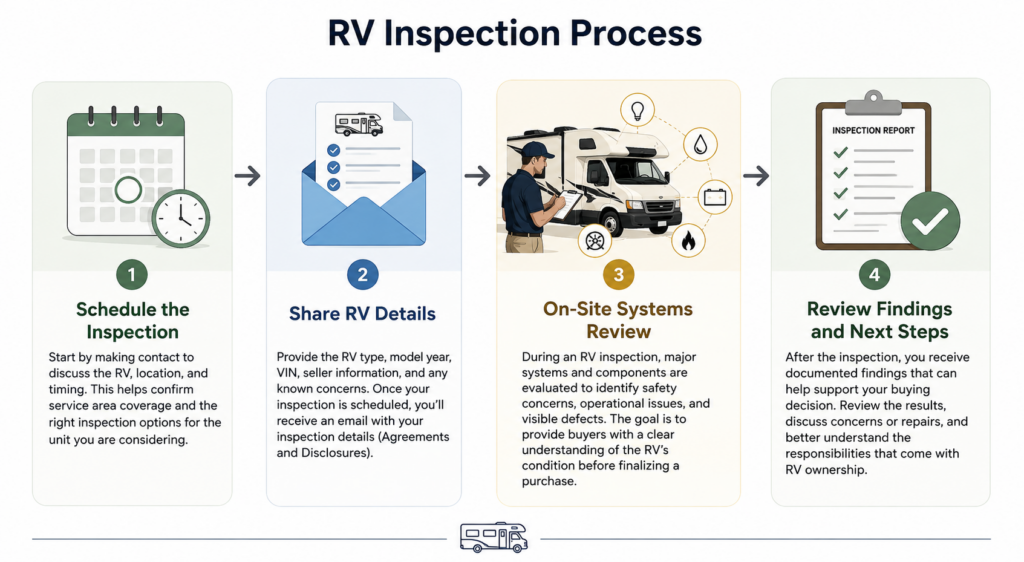
A professional RV inspection is a structured, multi-step evaluation of an RV’s major systems, safety components, and visible condition. The goal is to give buyers an objective understanding of the RV before completing a purchase.
This guide explains what happens during an RV inspection, how long the process may take, what information the inspector needs, what you receive afterward, and how inspection findings can be used when making a purchase decision.
What Happens If Issues Are Found?
Inspection findings rarely tell a simple “good” or “bad” story. Instead, they provide context: what’s minor, what’s developing, and what requires immediate attention.
Most RVs, even well-maintained ones, will show some level of wear or maintenance needs. The value of a professional inspection is not in finding perfection. It is in separating cosmetic or routine issues from structural or safety-related concerns.
When issues are identified, they should be documented, explained, and prioritized so you understand not just what is happening, but what it means for your decision. In many cases, findings become negotiation points, maintenance planning tools, or simple reassurance.
The goal is not to eliminate uncertainty. It is to replace it with clarity so you can move forward with confidence.
How the Inspection Works
An RV inspection follows a structured flow that moves from the outside of the unit to the systems inside. Each stage is designed to evaluate a different layer of condition and performance. Understanding what an RV inspection includes and what it cannot reveal is important when reviewing the process.
Exterior and Roof Evaluation
The inspection begins with the exterior, including seals, siding, roof condition, and any visible signs of wear or water intrusion.
Most roof issues we see in the field do not start in the roofing material itself.
They typically develop at sealant transitions and penetration points over time.
Roof findings are always interpreted alongside interior and structural indicators to determine whether conditions represent maintenance, developing concerns, or active risk.
- Roof membrane condition (fiberglass / TPO / PVC / EPDM)
- Sealant performance at all penetrations
- Roof-mounted components (A/C units, vents, skylights, solar panels, antennas)
- Evidence of previous repairs or resealing
- Signs of moisture intrusion or early failure points
Structural and Moisture Assessment
Attention is given to critical areas where hidden issues often develop, including framing, roof penetrations, and moisture-prone zones.
Structural and moisture concerns often originate in concealed areas and progress gradually before becoming visible.
Findings are interpreted in context, correlating interior conditions with likely exterior entry points and long-term exposure patterns.
Where present, indicators are evaluated for both current condition and what they suggest about progression and source.
- Walls, floors, ceilings, and structural transitions
- Slide-out openings, corners, and high-stress junctions
- Windows, doors, and additional penetration points
- Underbelly and storage compartments
- Floor systems; tested for soft spots, flex points, or inconsistent rigidity under load
Systems Testing
All major systems are tested, including electrical, plumbing, propane, heating, and air conditioning systems, under real operating conditions.
System performance is evaluated beyond initial activation.
The focus is on behavior under load, sustained operation, and overall stability in real-world use conditions.
Findings are based on operational response rather than isolated function checks.
- Electrical systems: proper function, load response, and distribution performance
- Plumbing systems: water delivery, drainage, pressure consistency, and leak indicators
- Propane systems: safe operation, appliance ignition, and steady combustion performance
- Heating systems: ignition, airflow, and temperature output stability
- Air conditioning systems: startup behavior, cooling output, and sustained operation under load
Interior Function and Condition Review
Interior components are evaluated for function, fit, finish, and signs of wear or previous repair work.
Interior condition often reflects long-term use patterns and maintenance history.
Minor issues in operation or finish frequently indicate broader trends in adjustment, wear, or deferred upkeep.
Evaluation focuses on whether condition and performance align with expected function for age and use.
- Cabinets, doors, drawers, and latches: alignment, operation, and hardware integrity
- Flooring, wall surfaces, and trim: wear patterns, separation, or prior repair indicators
- Appliances and installed interior equipment: proper function and secure mounting
- Windows, shades, and interior closures: smooth operation and sealing integrity
- Furniture and convertible components: function, stability, and wear under use conditions
Final Documentation and Review
All findings are documented with photos and written explanations to provide a complete and organized record of the RV’s condition.
All observations are consolidated into a clear, structured report that connects individual findings to overall condition patterns. The goal is not just documentation, but clarity: helping you understand what was found, why it matters, and how it relates to the RV as a whole.
What You Can Expect
The inspection process is designed to be clear, structured, and transparent from start to finish.
Typical inspections follow a defined timeline depending on RV type and condition. Updates may be provided during the inspection when significant findings are discovered. In other cases, results are compiled and delivered in a complete report after all systems have been evaluated. A crucial detail to keep in mind for every inspection is that they represent a snapshot of the RV’s condition on the day it is inspected.
Questions are encouraged at any stage of the process, and findings are explained in practical terms so you understand not just what was found, but what it means.
What You Receive
The inspection report is designed to give you a complete, organized view of the RV’s condition.
You will receive a detailed written report outlining all findings, supported by photo documentation. Each issue is explained and prioritized so you can clearly understand what is minor, what is developing, and what may require immediate attention.
Reports include system-by-system breakdowns along with context that helps you interpret how each finding affects the overall condition and usability of the RV.
Sample Inspection Reports
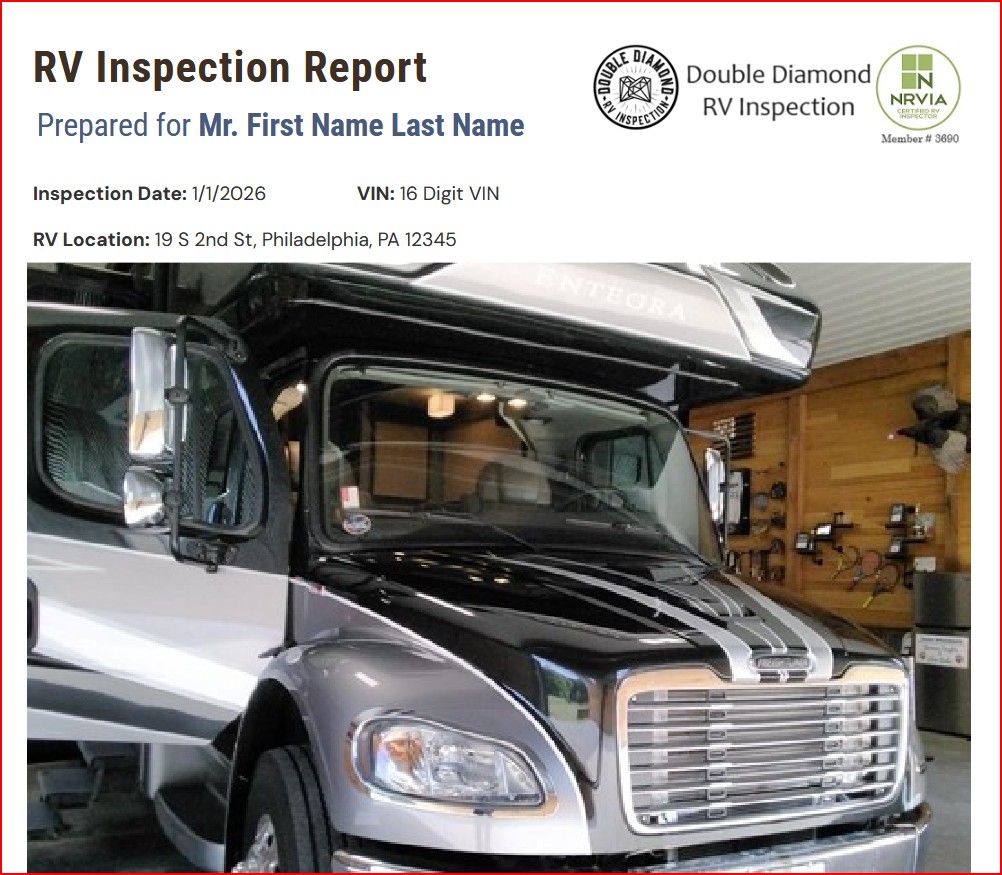
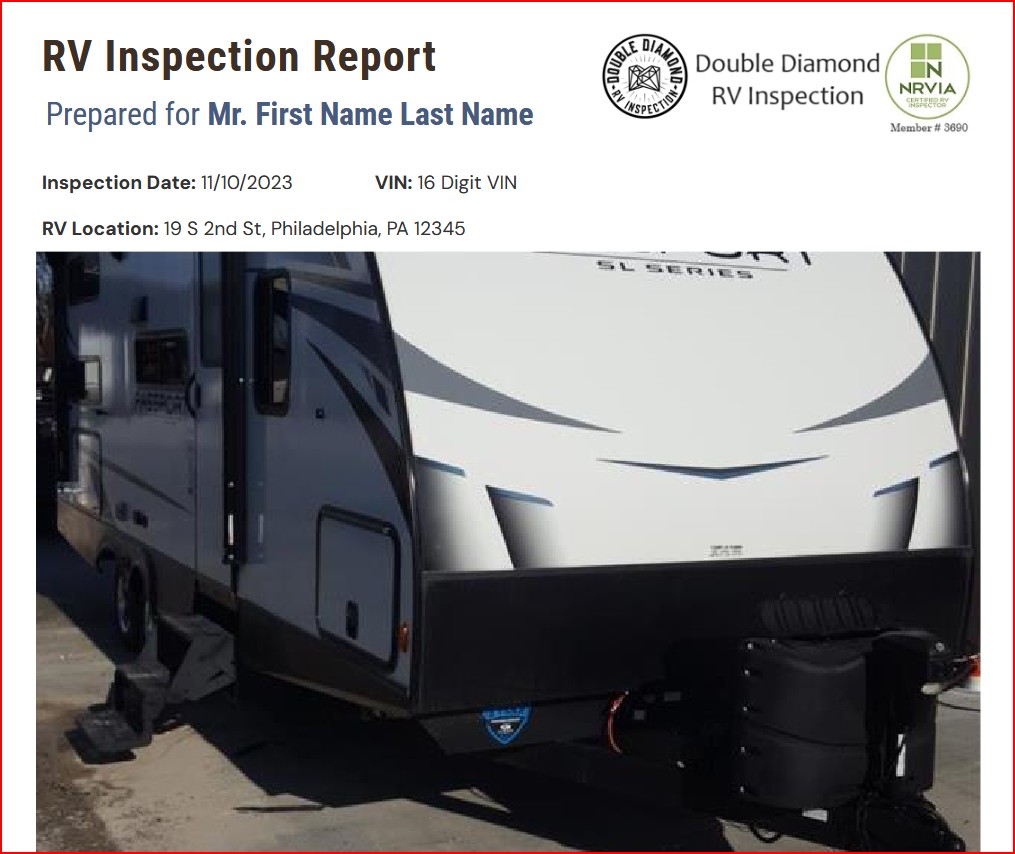
Review sample reports to understand how findings, photos, and system evaluations are documented.
Super C Sample Report
Travel Trailer Sample Report
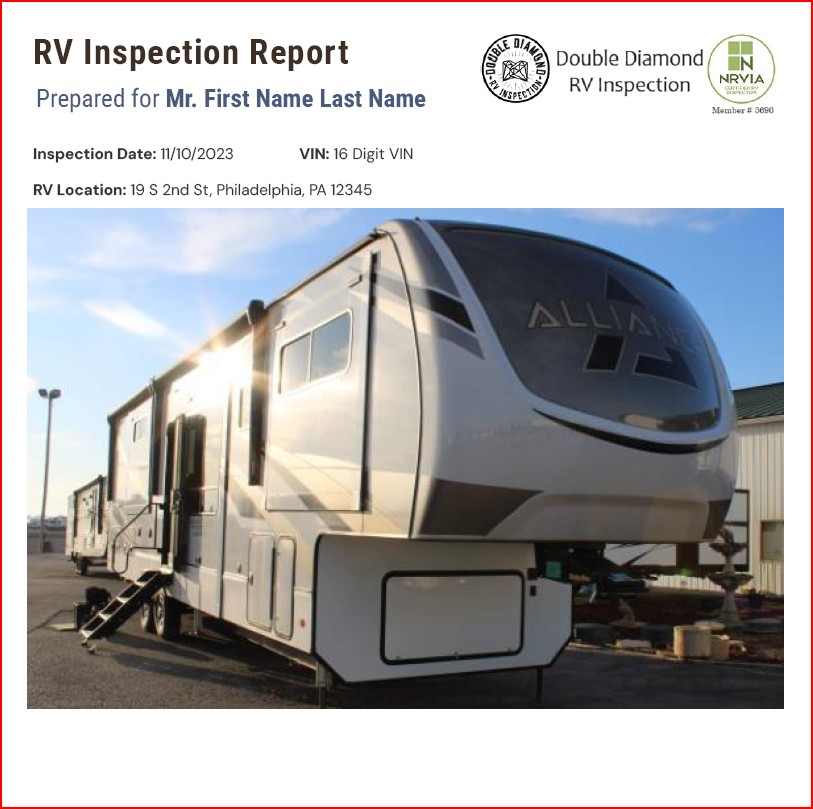
Fifth Wheel Sample Report
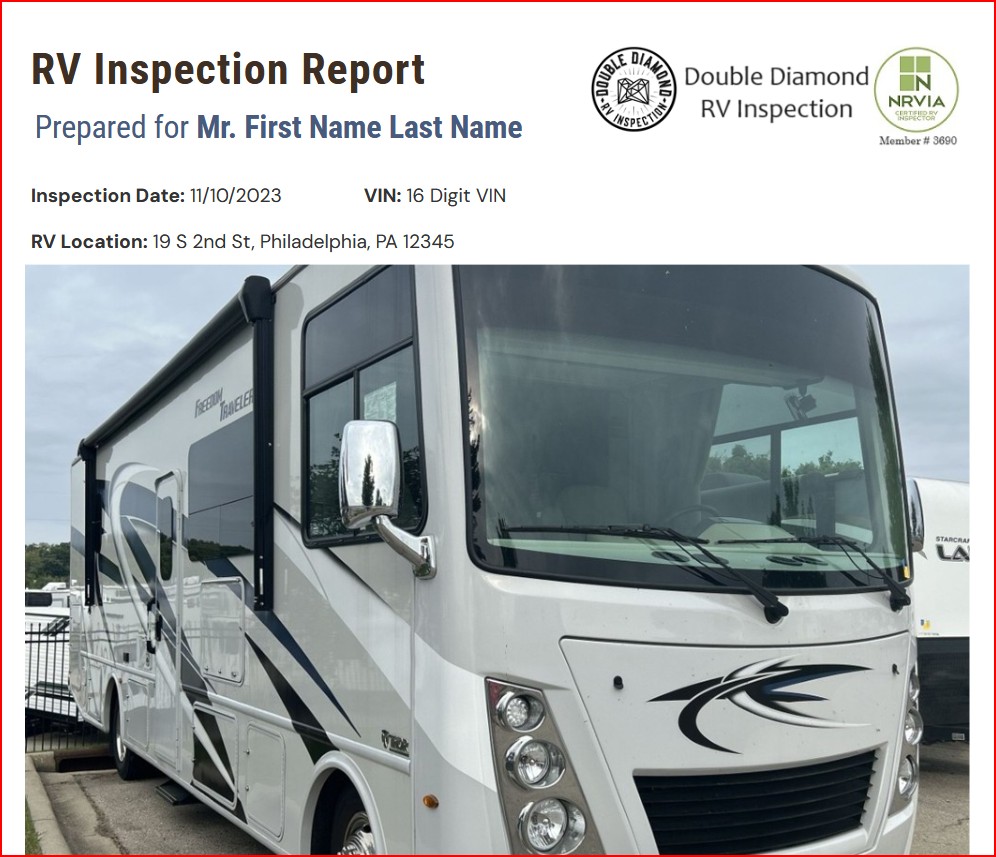
Class A Sample Report
How to Use Inspection Findings
Inspection results are not just a list of problems. They are a decision-making tool.
Findings can be used for RV negotiation based on condition when issues affect value, for planning future maintenance, or for confirming whether a purchase still makes sense based on risk and condition.
In some cases, findings provide reassurance that concerns are minor and manageable. In others, they help identify risks that are not immediately visible during a walkthrough.
Why Process Matters
A structured inspection process ensures that nothing is evaluated randomly or overlooked. Every RV is assessed in a consistent way, so results are reliable, repeatable, and easy to understand.
The goal is not perfection. The goal is clarity. With clear, organized information, you can make a confident decision about your RV purchase or ownership path.